













































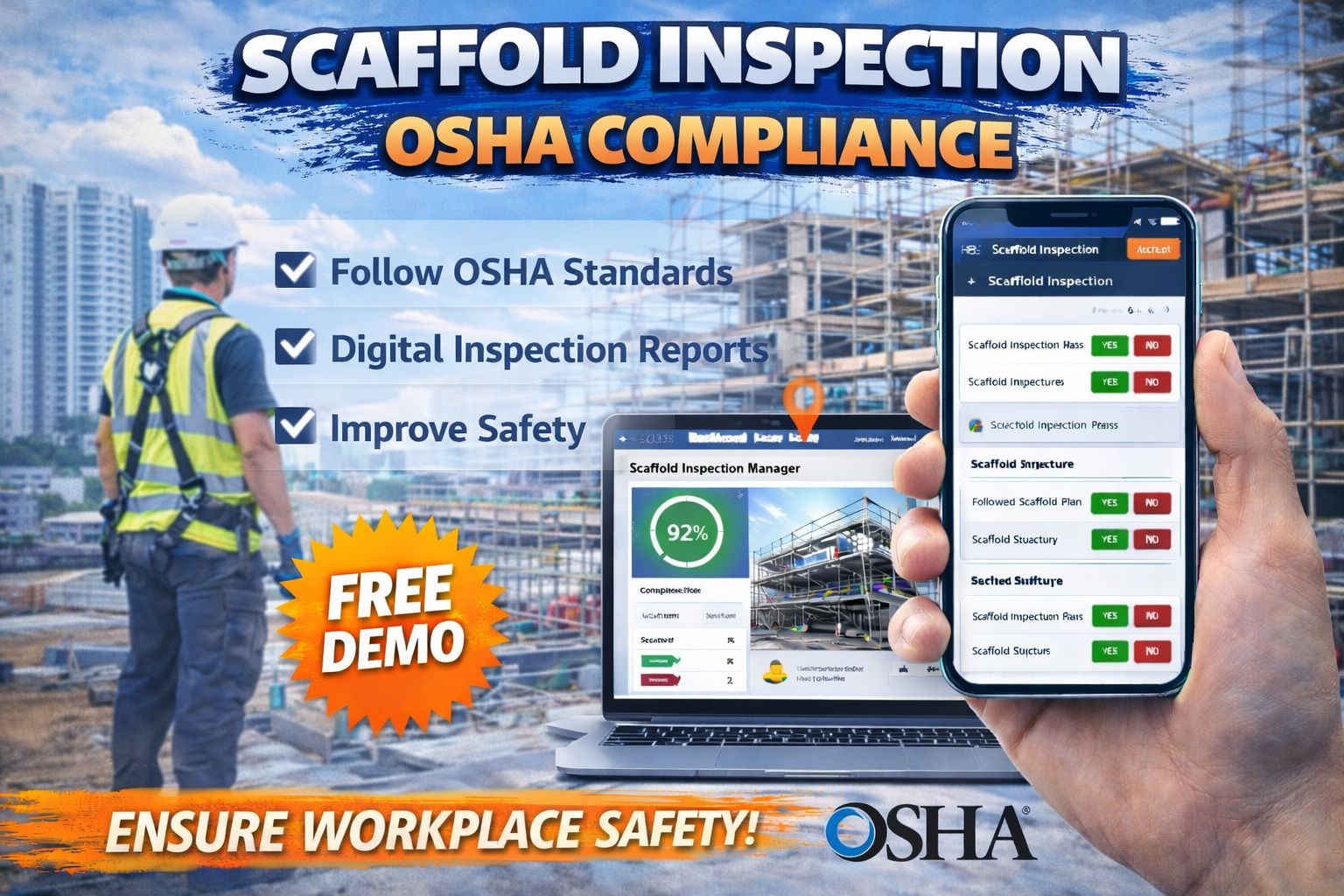
Scaffold Inspection OSHA Compliance

Scaffold Inspection OSHA Compliance refers to adhering to the Occupational Safety and Health Administration (OSHA) standards under 29 CFR 1926 Subpart L (specifically §1926.451) for scaffolding in construction. These rules mandate regular inspections by a competent person to identify visible defects, ensure structural integrity, and prevent falls—one of the leading causes of construction fatalities and injuries.
OSHA requires scaffolds and components to be inspected before each work shift (daily) and after any occurrence that could affect integrity (e.g., high winds, heavy rain, impacts, modifications, or relocation). Inspections must be visual, thorough, and documented, with immediate corrective actions (repair, brace, or removal from service) for damaged/weakened parts.
Key OSHA Scaffold Inspection Requirements (§1926.451(f)(3))
- Competent Person Definition — Someone capable of identifying existing/predictable hazards and authorized to take prompt corrective measures (§1926.450(b)). They must inspect scaffolds/components for visible defects.
- Inspection Frequency — Before each work shift (daily) and after events impacting structural integrity (e.g., adverse weather, alterations).
- Scope — Check all visible components: base/foundation stability, legs/poles/frames, bracing/ties/anchors, platforms/decks (fully planked), guardrails/midrails/toeboards, access (ladders/stairs), couplers/fasteners, ropes (for suspended scaffolds), and loading capacity.
- Corrective Actions — Damaged parts must be repaired/replaced, braced, or removed from service immediately if strength falls below required levels.
- Capacity & Design — Scaffolds support 4x maximum intended load; designed by qualified person.
- Related Rules — Fall protection (guardrails/PFAS above 10 ft), platform width (min 18 inches), guardrail height (38–45 inches post-2000), crossbracing/midrails, stable footings/base plates/mud sills, and guying/bracing for height-to-base >4:1.
- Training — Workers must be trained to recognize hazards (§1926.454); competent person oversees erection/dismantling and inspections.
Non-compliance can lead to citations, fines, stop-work orders, or increased liability—scaffolding remains one of OSHA’s most-cited standards.
How Scaffold Inspection Software Ensures OSHA Compliance
Digital tools like QR code-based or mobile-first systems automate compliance by:
- Providing OSHA-aligned checklists covering all §1926.451 requirements (stability, components, fall protection, etc.).
- Enabling daily/pre-shift inspections with timestamps, electronic signatures, and auto-reminders.
- Capturing photo/video evidence of defects (e.g., loose braces, missing toeboards) with annotations for audit trails.
- Issuing digital tags/status (safe/unsafe) and tracking corrective actions with deadlines/verification.
- Generating instant reports with full history, photos, and export options for OSHA/MOM-style audits.
- Offering real-time dashboards for multi-site oversight, overdue alerts, and compliance metrics.
- Supporting offline use for field reliability, with secure cloud sync.
These features reduce paperwork errors, ensure timely inspections, and create verifiable records—crucial for proving due diligence during OSHA visits.
Exiga Software Solutions Pte Ltd offers HSE tools (including scaffold safety inspection features) that align with rigorous safety standards. Their mobile apps support digital checklists, QR/NFC tagging, defect logging, and reporting—adaptable for OSHA-style workflows in global or U.S.-influenced projects.

